
Preventing damage to your home while you’re away for the holidays starts with controlling water, maintaining heat, and arranging reliable checks. A leak or failed furnace needs attention even when you’re miles from Southwest Montana. At Treasure State Restoration, we offer free inspections for water damage, fire/smoke damage, and mold, plus emergency dispatch. If you notice damage before leaving, call (406) 404-9826 instead of postponing an assessment.
Jump to a section
- Start with the problems you already know about
- Make a water plan that fits your house
- Protect heat and pipes during winter holiday travel
- Give your house sitter a real response plan
- Reduce fire and security risks before departure
- Check drainage without taking roof risks
- Respond to an alert without entering danger
- Base restoration decisions on measurements
- Frequently Asked Questions
Start with the problems you already know about
A damp cabinet or unreliable furnace deserves attention before your suitcase does. Travel gives an unnoticed problem more time to spread. We recommend addressing existing warning signs before buying new monitoring equipment.
Walk through your home with appliances off and rooms quiet. Look under sinks, around toilets, beside the water heater, and near laundry connections. Check accessible basement walls and floors for dampness without entering unsafe crawlspaces.
- Water stains: Photograph ceiling discoloration and investigate whether the area is still wet.
- Loose connections: Have a plumber assess leaking valves, damaged hoses, or corrosion.
- Heating trouble: Arrange service for unusual shutdowns, error messages, or rooms that stay cold.
- Musty odors: Investigate the moisture source instead of covering the smell with fragrance.
Don’t mistake a dry surface for a resolved problem. Moisture may remain beneath flooring or inside wall cavities after visible water disappears. Our free water damage inspections provide a starting point for assessing those concerns before departure.
Once you address existing issues, decide which systems should stay running and which water supplies can be safely isolated.
Make a water plan that fits your house
Closing an appropriate water supply valve may reduce water released by a plumbing failure. It doesn’t protect against roof leaks, groundwater, or sewer backups. It also doesn’t drain the water already inside your pipes.
Ask a plumber whether shutting off your domestic water supply suits your home. Fire sprinklers, water-fed heating equipment, and private well systems require specific instructions. Don’t close an unidentified valve or force one that won’t turn.
Separate appliance supplies from essential systems
Appliance shutoffs offer a more targeted option when you need to keep the main supply open. Ask your plumber about isolating the washing machine, dishwasher, or refrigerator supply. Follow equipment instructions for water heaters and other connected appliances.
Finish laundry and dishwashing before leaving, while someone can watch for leaks. Check the floor afterward. A final load running in an empty house adds a risk you don’t need.
Label approved shutoffs and show your house sitter where they’re. A photograph helps, but a supervised walk-through is better than instructions sent during an emergency.
Compare the protection layers
No single option addresses every water source. Choose protection based on your plumbing, internet reliability, and who can respond. These options complement one another rather than replace professional maintenance.
| Protection Layer | Main Purpose | Works Without Internet | Important Limitation | Preparation Needed |
| Manual domestic water shutoff | Main Purpose: May limit incoming water from supply-side leaks | Yes | Important Limitation: Does not address groundwater, roof leaks, or stored water | Preparation Needed: Have a plumber identify the correct valve and confirm system compatibility |
| Connected leak sensor | Main Purpose: Sends an alert when water reaches the sensor | Works Without Internet: Remote alerts generally require a connection | Important Limitation: Does not stop water unless paired with compatible shutoff equipment | Preparation Needed: Test alerts, batteries, placement, and backup contacts |
| Automatic water shutoff | Main Purpose: May close a valve after detecting a configured leak condition | Works Without Internet: Local operation depends on the model | Important Limitation: Does not control water entering outside the supply plumbing | Preparation Needed: Arrange professional installation and testing according to manufacturer instructions |
| Trusted person’s inspection | Main Purpose: Checks for visible leaks, odors, and heating problems | Yes | Important Limitation: Problems can begin between visits | Preparation Needed: Provide working access, written instructions, and an emergency contact plan |
We’d choose a compatible shutoff plan plus a person who can respond, rather than rely on phone alerts alone. Cold-weather trips also need a separate heating plan.
Protect heat and pipes during winter holiday travel
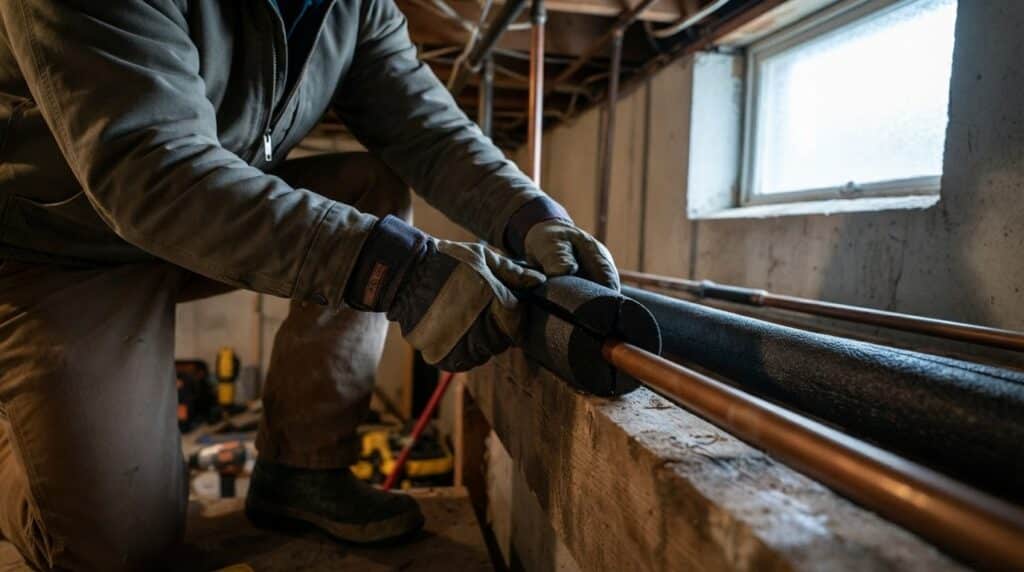
For cold-weather travel, keep your heating system running and address vulnerable plumbing before you leave. Southwest Montana cold snaps can expose weak spots near exterior walls and crawlspaces. A warm hallway doesn’t prove those spaces are warm.
Ask your HVAC professional for an appropriate away setting for your building. Follow your policy’s heating requirements too. Avoid choosing a low thermostat setting solely to save energy.
Focus on freeze points, not just the thermostat
Freeze point insulation means protecting pipe sections most exposed to cold, such as plumbing near rim joists or exterior wall openings. Have a qualified contractor assess insulation and air leaks there. Insulation slows heat loss; it doesn’t supply heat.
Keep heat registers clear, close exterior doors securely, and check accessible heating-system filters per the manufacturer’s instructions. Have outdoor plumbing prepared for winter based on its design. Don’t assume a frost-resistant faucet tolerates an attached, water-filled hose.
A temperature sensor near vulnerable plumbing may reveal conditions that the main thermostat misses. Place it safely and test the alert before departure. Keep cabinet access safe for children and pets.
Prepare for heating failure and thawing damage
Your backup person needs instructions for a furnace failure, not just a thermostat password. Give them your HVAC contractor’s details and a clear threshold for when to call. Don’t use an unattended portable heater as a substitute for dependable central heat.
If pipes are suspected to be frozen, call a plumber and arrange rapid thawing damage control. Water may escape through a split as ice melts. Never use an open flame, and don’t restore water to questionable plumbing without professional direction.
Keep people away from wet electrical equipment. The next safeguard is making sure someone can recognize these conditions and act while you’re gone.
Give your house sitter a real response plan
House sitting for holidays works better with specific duties than a request to keep an eye on things. Ask your helper to enter the home, check agreed areas, and report concerns. A drive past the driveway won’t reveal water under a sink.
Set a visit schedule that reflects weather, building condition, and insurance requirements. Arrange a backup if travel conditions prevent the first person from reaching your property. For homes reached through Gallatin Canyon, account for winter road conditions when choosing that backup.
- Test access. Confirm the key, alarm code, and entry instructions work before you leave.
- Define the walk-through. Include the kitchen, bathrooms and safely accessible basement or utility room.
- Check operating conditions. Ask them to confirm the heat is running and look for water, stains, or unusual odors.
- Set response limits. Explain which labeled valve they may operate and which equipment requires a professional.
- Share contacts. Include your backup decision-maker, plumber, HVAC contractor and restoration contact.
Agree on a brief message after each visit. A photograph of an accessible utility area may help you compare conditions, but it doesn’t replace an inspection.
Write down who can authorize emergency work if you’re unreachable. Share only necessary access details, using a secure method. This response plan also supports home security while away.
Reduce fire and security risks before departure
Remove unattended heat sources and damaged electrical cords from your holiday departure list. Extinguish candles and fireplace fires fully. Unplug portable heaters and decorative lighting before leaving, following manufacturer instructions.
Test smoke and carbon monoxide alarms according to their manuals. Don’t assume a security camera hears an alarm or sends an emergency notification. Confirm what each connected device actually does.
If you’re using timers for indoor security lighting, choose compatible equipment in good condition. Keep lamps away from curtains and other combustible materials. Don’t run cords under rugs or through pinched doorways.
- Lock secondary entrances: Check basement windows, side doors, and the door between the garage and house.
- Manage deliveries: Arrange collection or holds so packages don’t remain outside.
- Limit travel announcements: Save public vacation posts until you’ve returned.
- Keep essential power on: Don’t disconnect circuits serving heat, alarms, sump pumps, or required monitoring equipment.
Give your helper instructions to stay outside if they detect smoke, a gas odor, or an active alarm. Emergency responders come before property checks. Once a fire scene is released, Fire & Smoke Damage Restoration addresses damage that may extend beyond visible burn marks.
Interior preparation matters, but water can also enter from outside your home’s plumbing.
Check drainage without taking roof risks
Clear drainage paths may reduce water collecting beside your foundation during rain or snowmelt. From the ground, check for blocked downspout outlets and debris around accessible drains. Arrange qualified help for roof or gutter work.
Don’t climb an icy ladder to finish a last-minute checklist. Ice at roof edges, recurring ceiling stains, or sagging gutters deserve a contractor’s assessment. Snow removal near roof edges also calls for suitable equipment and safe methods.
Check sump pump operation using the manufacturer’s procedure, or have a professional test it. Confirm the discharge route is unobstructed and that any backup system is ready. A disconnected pump can’t protect a basement while you’re away.
Move important documents and vulnerable belongings off basement floors. Keep storage clear of drains and equipment. This may limit damage to possessions, but it isn’t a substitute for fixing water entry.
For a private well or septic system, get property-specific guidance from the appropriate contractor. Closing the home’s supply valve won’t stop groundwater entering a basement or every possible sewage backup.
Respond to an alert without entering danger
A water alert needs a local response, not just a cleared phone notification. Ask your designated person to assess from a safe location. Don’t send them into standing water, a sagging-ceiling area, or a room with wet electrical equipment.
If you can safely access the approved shutoff, follow the plan you established with your plumber. Otherwise, wait for qualified help. Photograph visible damage only when doing so doesn’t delay safety measures.
Professional drying looks beyond the puddle
Our Water Damage Restoration process includes moisture mapping, extraction, and dehumidification. Moisture mapping uses measurements to identify affected materials and track wet areas. Extraction removes accessible liquid water using equipment suited to the conditions.
Dehumidifiers remove water vapor from the air as wet materials release moisture. Air movement supports that process when appropriate for the contamination conditions. We assess moisture readings rather than judging dryness by touch alone.
Don’t aim household fans at sewage-contaminated materials or suspected mold. Mold remediation requires physical containment, HEPA filtration, and resolution of the structural moisture source before clearance. HEPA filters capture fine particles; they don’t fix the leak feeding the problem.
Structural drying durations and mold remediation scopes vary significantly based on material porosity, water category, ambient temperature, and moisture exposure duration. Porosity describes how readily a material absorbs water; water category describes its contamination level.
Document the damage and preserve claim records
Keep photographs, inspection notes, invoices, and communications together. Tell your insurer when you discovered the damage and what immediate protective steps you took. Ask before discarding damaged items unless safety requires urgent action.
We help with insurance claims and prepare Xactimate estimates. Xactimate is software used to document property damage repair costs. Coverage, limits, and eligibility are determined by the issued policy and applicable state rules.
Base restoration decisions on measurements
Treasure State Restoration is an IICRC-certified firm that follows global standards for inspection and restoration. Our family-owned team is based in Belgrade and serves surrounding Southwest Montana communities. We use documented conditions to guide restoration decisions, not assumptions about how long a floor has looked dry.
A free inspection for water damage, fire/smoke damage, or mold is separate from paid restoration work. Ask for the recommended scope before authorizing work. Financing is available, and our team can discuss it when reviewing the project.
Preventing damage to your home while traveling also means knowing when prevention has become a restoration problem. An active leak, new ceiling stain, or persistent dampness belongs on the assessment list before departure.
Frequently Asked Questions
Can a smart thermostat replace house sitting during a Montana winter?
No, a smart thermostat cannot replace a person who can inspect and respond during a Montana winter. Its readings may not reflect conditions around exterior-wall plumbing or in a crawlspace. Remote alerts also rely on working power and communications. Pair monitoring with a trusted helper who has access and written emergency instructions.
Does Treasure State Restoration inspect suspected damage before a trip?
Yes, Treasure State Restoration offers free inspections for water damage, fire/smoke damage, and mold. Tell us about stains, odors, visible water, and when you first noticed them. An inspection addresses suspected damage; it isn't a whole-house plumbing or heating certification. Use the appropriate licensed trade for mechanical repairs and system-specific winter preparation.
What should my house sitter do after finding a sewage backup?
To respond to a sewage backup, your house sitter should keep people and pets out of the affected area and arrange professional help. They shouldn't use household fans, walk through contaminated water, or handle wet belongings. Stop using connected plumbing when advised, and have the source assessed alongside the cleanup needs.
Can restoration start while I'm still away?
Yes, restoration can be coordinated while you're away once safe access, authorization, and communication arrangements are in place. Give the team a reliable contact and identify who can make decisions if you're unavailable. Treasure State Restoration offers 24/7 emergency dispatch for water, fire, and mold emergencies. Response arrangements depend on the property's actual condition.
The Bottom Line
- Fix known leaks and heating problems before departure.
- Choose a water shutoff plan that respects your home’s essential systems.
- Pair alerts with a person who can enter safely and act.
- Leave written instructions for access, emergency contacts, and authorization.
Preventing damage to your home while you’re away starts with preparation, but suspected damage deserves professional attention.
Leave with a clear damage response plan
We offer free inspections for water damage, fire/smoke damage, and mold, plus 24/7 emergency dispatch for those emergencies. Dispatched locally from Belgrade, Montana to homes and businesses throughout Bozeman, Big Sky, and Southwest Montana.
If you’ve found signs of damage before your holiday trip, call Treasure State Restoration at (406) 404-9826 to arrange an inspection.
Related Reads
- Protecting Your Home from Water Damage During Extreme Weather
- Water Damage Restoration in Belgrade | – Damage Restoration Services for Southwest Montana
- Fire and Smoke Damage Projects | Treasure State Restoration – Damage Restoration Tips and News for Southwest Montana
- Flood Damage Restoration | – Damage Restoration Services for Southwest Montana
- Does Renters Insurance Cover Fire Damage? What You Need to Know - November 18, 2026
- Preventing Damage to Your Home While You’re Away for the Holidays - November 18, 2026
- Health Benefits of Residential Air Vent Cleaning - November 17, 2026