24/7/365 Emergencysupport@treasurestaterestoration.com
406.404.9826
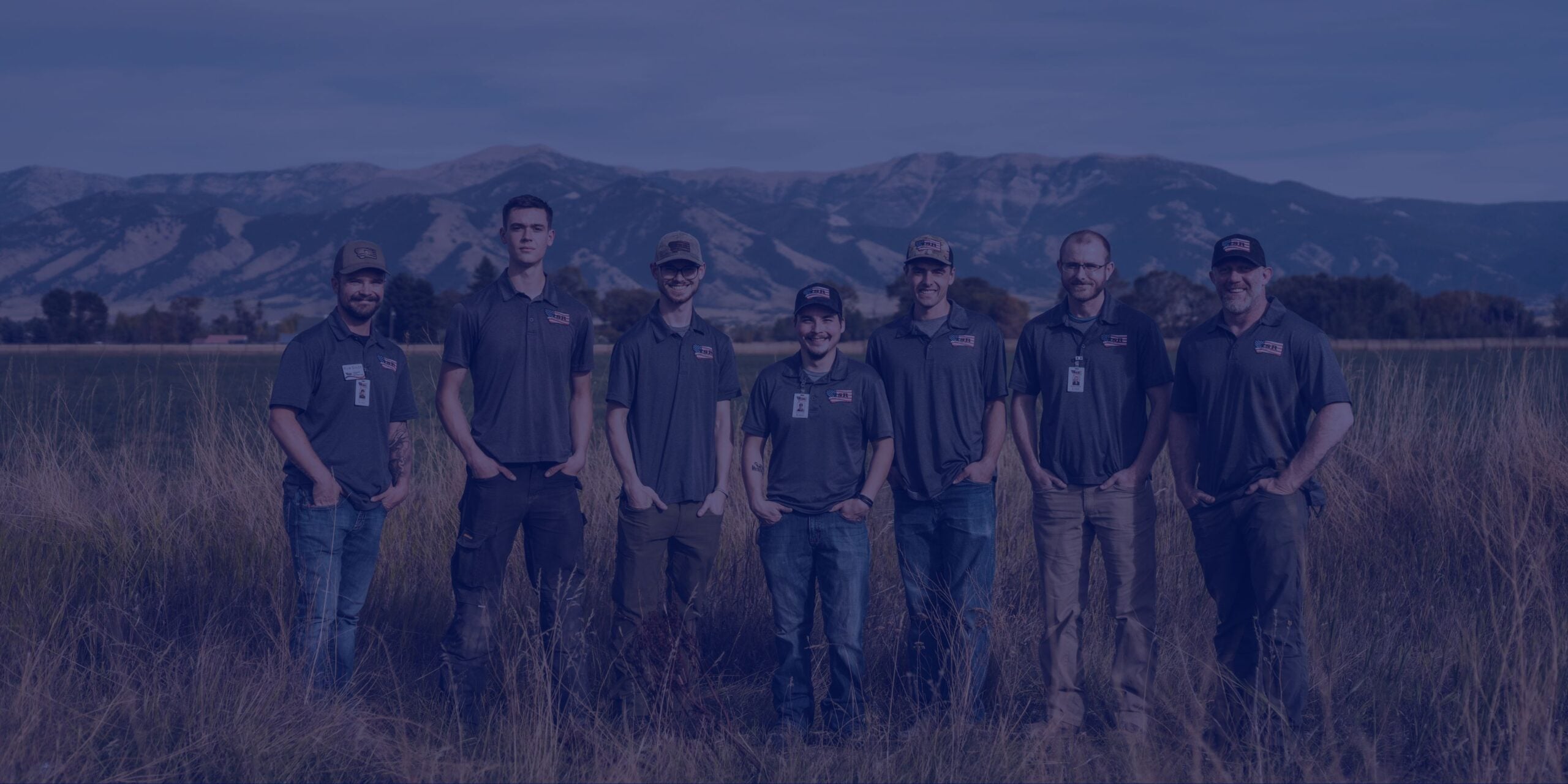
Eight men wearing matching shirts and ID badges stand in a field with mountains in the background, posing for a group photo as part of their restoration services team.
Emergency Restoration Services

Water, Fire & Mold Damage Restoration in Livingston, Montana

River water in the basement? A pipe that split during a bitter, windy cold snap? Smoke odor after a chimney fire? A real person answers our 24/7 dispatch line.

Licensed & Insured 24/7/365 Response 30+ Years Experience IICRC Certified
Book a Free Inspection

Family-Owned Restoration for Livingston Homes and Businesses

Treasure State Restoration is a family-owned, IICRC-certified company with its shop in Belgrade. We work all over Livingston (59047). That includes downtown, the historic Eastside and Westside neighborhoods, the southeast side near the Yellowstone River and newer homes on the north end. Our crews take on water damage, mold remediation, fire and smoke cleanup, duct cleaning and insulation removal, day or night. That goes for houses, rentals and commercial buildings alike.

Our team brings more than 30 years in the trade and over 1,000 restored Montana homes. We send the bill straight to your insurance company, and most homeowners end up paying just their deductible. Before any work begins, you’ll have a written estimate in hand.

Large blue industrial fans are placed on a bare floor in a building, likely used for water damage restoration or ventilation purposes.

What Causes the Most Damage in Livingston Homes

Livingston sits where the Yellowstone River bends east, and it is one of the windiest places in the United States. Here’s what tends to cause the most damage in local homes, and what to watch for.

River Flooding Along the Yellowstone

On June 13, 2022, the Yellowstone crested near Livingston around 11 p.m. Streets E through O south of Lewis Street were evacuated, and Ninth Street Island lost several structures. Floodwater carries mud, debris and often sewage, so everything it touches needs cleaning and sanitizing, not just drying.

Wind Damage to Roofs and Windows

On February 28, 2024, the Livingston airport recorded a 92 mph gust, the second-strongest on record there. Gusts like that peel shingles, crack windows and drop trees onto roofs. Then the next rain or snow comes straight inside, soaking insulation and ceilings.

Aging Pipes and Wiring

The city’s 2021 growth policy found that 72 percent of Livingston’s housing units were built before 1980. It also notes that older homes are more likely to have plumbing and electrical problems. Corroded supply lines, worn fittings and old drains often leak inside walls before anyone sees a stain.

Frozen Pipes in Bitter Cold

During the January 2024 cold snap, Livingston hit -29°F with a wind chill of -57°F. Wind pushes frigid air through crawlspace vents, rim joists and gaps in older walls. Pipes near those gaps freeze first, and the leak often appears only when they thaw.

Wildfire Smoke and House Fires

Livingston’s growth policy notes that summer wildfires across the West can bring significant smoke to the area. Smoke residue settles into ductwork, insulation and upholstery, and the odor can linger long after the air clears. A kitchen or chimney fire does the same damage in minutes.

What Happens When You Call

1. A Real Person Picks Up

Call any hour and a dispatcher answers, takes down what happened and sends a crew east over Bozeman Pass to Livingston.

2. Water Off, Hazards Checked

First we stop the water at its source. Then we check for live wiring, sagging ceilings and other hazards, a step that matters in older homes.

3. We Record Everything for Your Claim

Photos, moisture logs and a written estimate go to you and your insurance adjuster, so your claim starts with clear evidence.

4. Water Out, Drying Equipment In

Truck-mounted extraction removes the standing water. Commercial dehumidifiers and air movers take over from there, with moisture readings logged daily until the structure meets drying standards.

5. We Clean Up and Walk Through It With You

We sanitize, apply mold prevention, remove odors and clean your belongings. Then we walk through the finished space with you before we pack up.

Care for Livingston's Historic Homes and Buildings

After a series of fires up to 1886, much of downtown Livingston was rebuilt in brick. Today the city has four National Register historic districts. Plaster walls, original wood floors and brick don’t dry the way modern drywall does. We track the moisture with meters, save original materials where we can, and photograph each step for your adjuster.

Landlords, property managers and downtown building owners get a written scope and records for every affected unit or storefront.

Restore Your Property Today

Available 24/7 for Emergency Water Damage Cleanup

From water extraction and drying to complete restoration, we're here to help. Call now for fast, reliable service.

Our Water Damage Restoration Services

Water Damage Restoration in Livingston, Montana

When the Yellowstone rises or a pipe lets go, water spreads fast. It wicks up plaster and drywall, soaks subfloors and runs down into basements and crawlspaces. Mold can take hold within a day or two. We get the standing water out quickly. Then we use moisture meters to find the wet areas you can’t see and dry the structure to standard.

From your first call through the final walkthrough, we manage every detail of your restoration project: extraction, drying, cleanup, and rebuild, so you can focus on your family.

Two industrial air movers are placed on a dusty floor near an open doorway, likely for drying purposes during a water restoration project or flood cleanup.

Flood Damage Cleanup

Yellowstone River and spring runoff flooding mucked out, sanitized and dried.
Close-up of a copper pipe with a visible crack, spraying water out forcefully, highlighting the urgency for Water Damage Repair, with insulation and wooden beams in the background.

Burst Pipe Water Damage

Quick extraction when a line bursts during a hard Livingston freeze.
Three large blue industrial fans are drying a bare, damaged floor inside a room with columns and windows covered by light curtains.

Frozen Pipe Damage Restoration

We open the wall, dry the cavity and check the ceiling below.
A plumber uses a wrench to fix a leaking pipe under a sink, with water dripping into a bucket placed below the pipes—an essential step in preventing further water damage before beginning full flood cleanup and water restoration.

Plumbing Leak Cleanup

Old galvanized lines, failed fittings, toilets and water heaters.
A bathroom with a dirty flooded floor, indicative of water damage, features a green hose, a white toilet, a blue fan, and cabinet doors.

Sewage Backup Cleanup

Category 3 water handled with protective gear and thorough sanitizing.
A basement with exposed walls and a concrete floor is drying out with multiple dehumidifiers and air movers after water damage. Cords and equipment are placed around the room as part of the professional flood cleanup and water restoration process.

Basement Flood Cleanup

Older foundations and finished basements pumped out and dried.
A sump pump installed in a wet basement pit with dirty standing water, surrounded by a wet concrete floor and a removed round cover—an essential component for effective water damage restoration.

Sump Pump Failure Cleanup

Groundwater that rose faster than the pump could keep up.
A large tree has fallen onto a house, causing significant damage to the roof and upper floor and resulting in water damage that may require professional water restoration services.

Storm Damage Water Cleanup

Wind-torn shingles, driven rain and blowing snow that got inside.
A person in boots uses a carpet cleaning machine to extract water from a soaked carpet in a residential room, performing essential water restoration after significant water damage.

Water Extraction

Truck-mounted units for houses, apartments and downtown storefronts.
A room under renovation with exposed walls, bare ceiling beams, and several blue air movers and a dehumidifier on the floor, showcasing an active water damage restoration process.

Structural Drying

Dehumidifiers, air movers and daily readings until the framing tests dry.
A worker in protective gear uses a vacuum to remove water from a flooded basement, surrounded by drying equipment and exposed wooden beams—a crucial step in the water damage restoration process.

Crawlspace Water Removal

Standing water pumped out from under the house and the space dried.

Get a Free, No-Obligation Estimate in Livingston

Our inspection is free. We’ll trace where the water went with moisture meters and hand you a written estimate, with no pressure to sign.

Our Mold Remediation Services

Mold Remediation in Livingston, Montana

In older Livingston homes, mold usually starts out of sight. Common spots are damp crawlspaces, slow leaks behind plaster and attics where wind-driven snow got in. A musty smell or a stain that keeps returning is worth checking. Our IAQA-certified techs track down the source of the moisture before anything else, then contain the area and remove the growth.

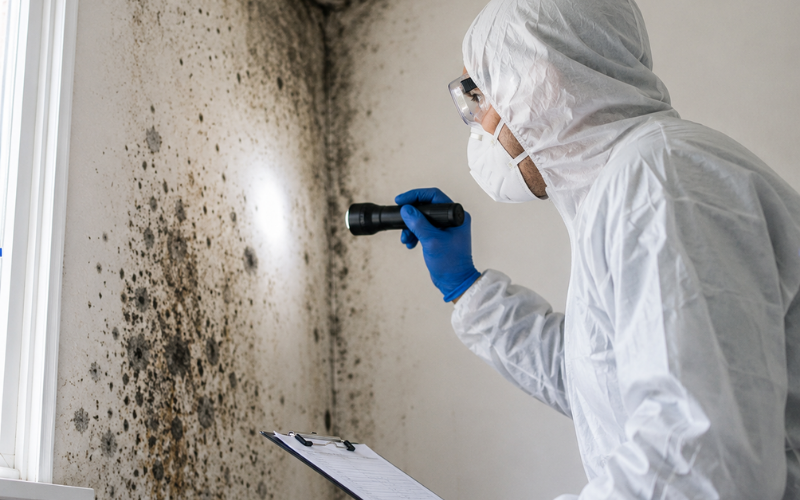
A person in protective gear inspects a mold-infested wall with a flashlight and clipboard in hand.

Mold Inspection

We map the moisture and tell you plainly what's growing and where.
Black mold growing on the lower corner of a white wall above a wooden floor, indicating water damage and possible indoor moisture issues.

Mold Remediation

Contained, step-by-step removal that follows industry standards.
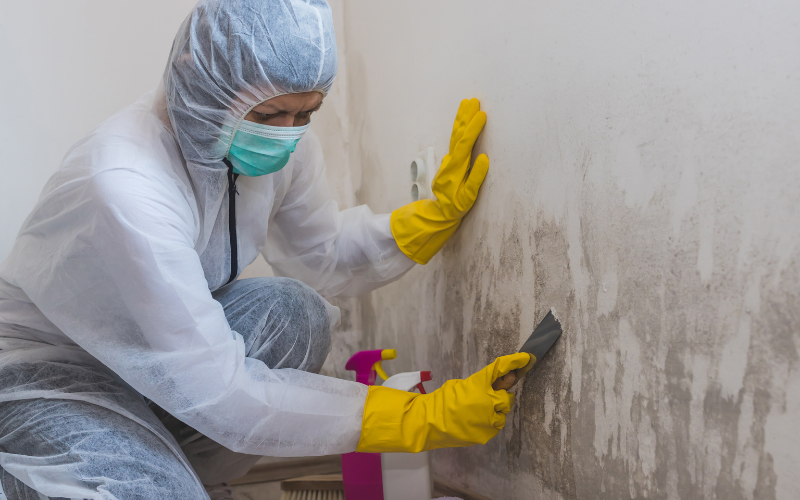
Person in protective suit and gloves uses a scraper to clean mold from a wall; cleaning supplies are on the floor nearby.

Mold Removal

Moldy materials taken out and the surfaces underneath cleaned.
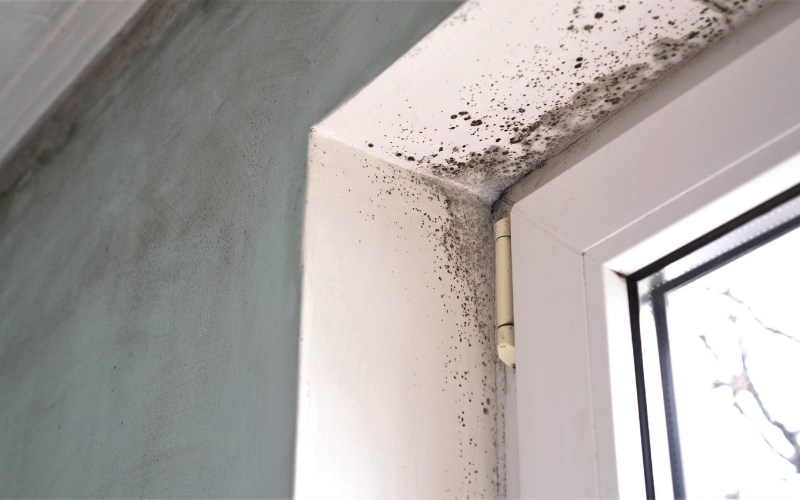
Black mold growing on a white window frame and nearby wall corner, indicating moisture or poor ventilation issues in the interior.

Mold Abatement

Bigger jobs handled under full containment with air filtration running.
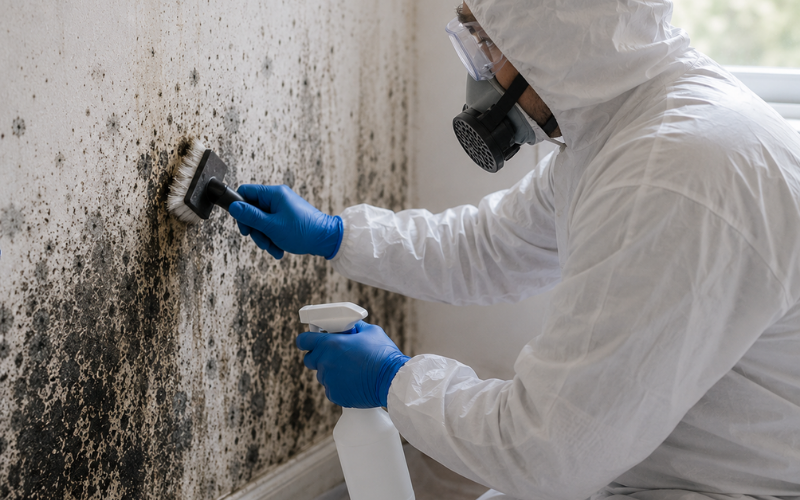
Person in protective gear scrubs mold from a wall with a brush, holding a spray bottle, in a room with heavy mold infestation.

Black Mold Removal

Careful removal of Stachybotrys and other molds that call for extra protection.
Person in protective suit seals a plastic barrier labeled "Mold Containment Do Not Enter" next to a wall with visible mold growth and a filtration device on the floor.

Mold Containment

Plastic barriers and negative air keep spores out of the rest of the house.
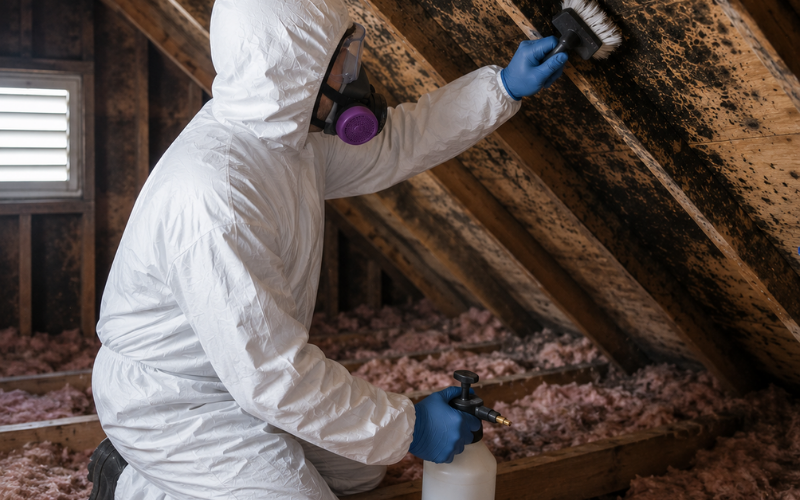
A person in protective gear uses a brush and spray bottle to clean mold from the wooden beams of an attic.

Antimicrobial Mold Fogging

An antimicrobial fog that reaches wall cavities and corners a wipe can't.
A room under renovation with exposed walls, bare ceiling beams, and several blue air movers and a dehumidifier on the floor, showcasing an active water damage restoration process.

Structural Drying & Moisture Control

Mold returns if the moisture stays, so we dry it and find the cause.
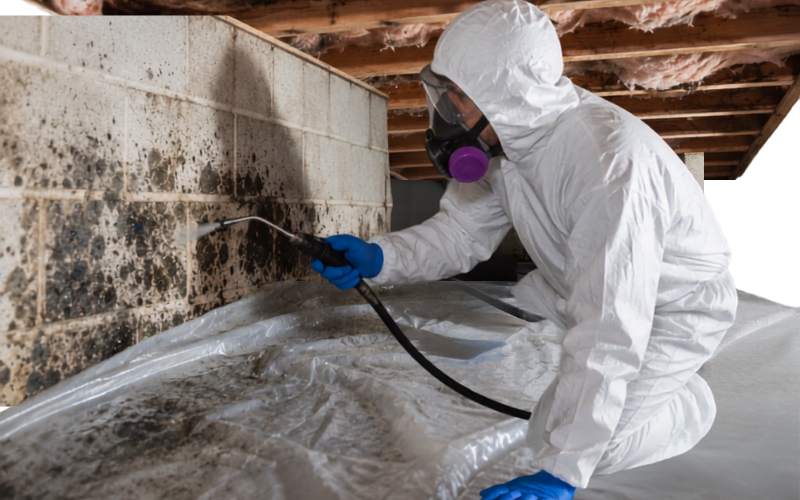
Person in protective gear sprays a moldy wall in a basement or crawl space with chemicals; insulation and wooden beams are visible above.

Crawlspace & Attic Mold Remediation

Common under older homes and in attics with roof or vent leaks.
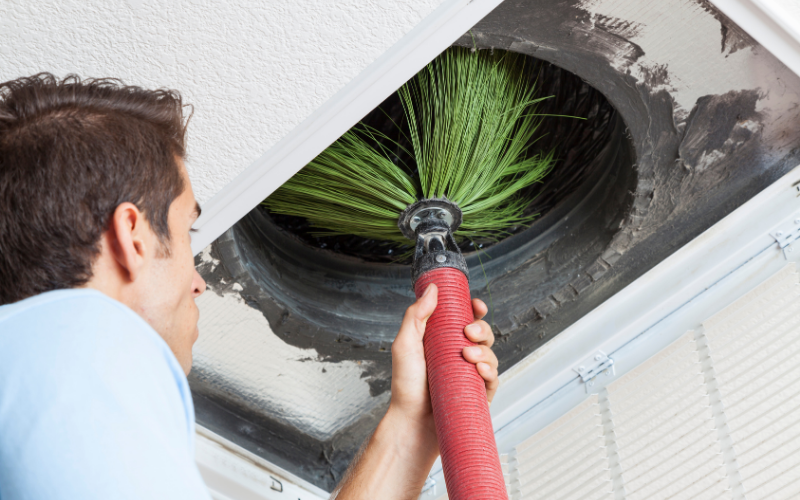
A person uses a brush attached to a hose to clean the inside of an air duct mounted in a ceiling.

Air Duct Cleaning

Spores and dust cleared out of your heating and air system.
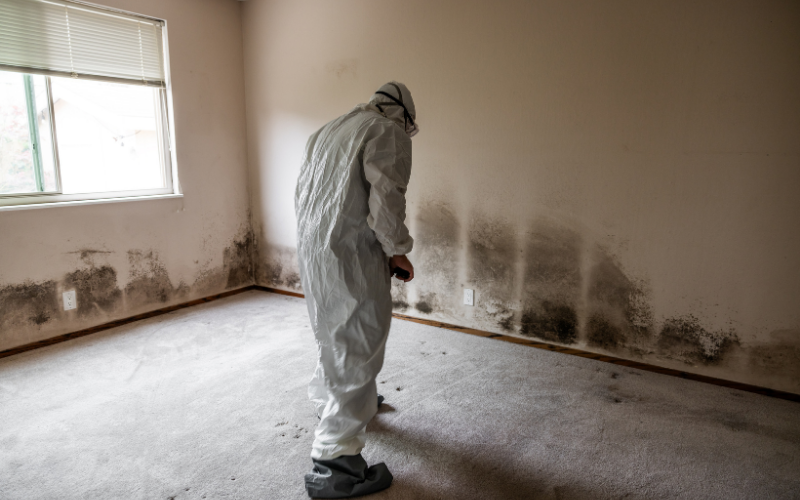
Person in protective gear inspects a carpeted room with extensive black mold growth along the lower walls near a window.

Emergency Mold Cleanup

Fast help for home sales, tenant move-outs and health concerns.

What Montana Homeowners Say

Our Fire & Smoke Damage Restoration Services

Fire and Smoke Damage Restoration in Livingston, Montana

A fire leaves more behind than charred wood. Soot residue is acidic and discolors surfaces the longer it sits. Smoke odor works into plaster, brick and upholstery, and the water used to fight the fire soaks floors and walls. We secure the building, clean everything that can be saved and treat the odor at its source.

A sunlit, abandoned interior with charred walls, lingering smoke curling through the air, and debris on the floor; water reflects the light while signs of fire damage are visible throughout the room.

Fire Damage Restoration

Cleanup after kitchen, chimney, wiring and structure fires.
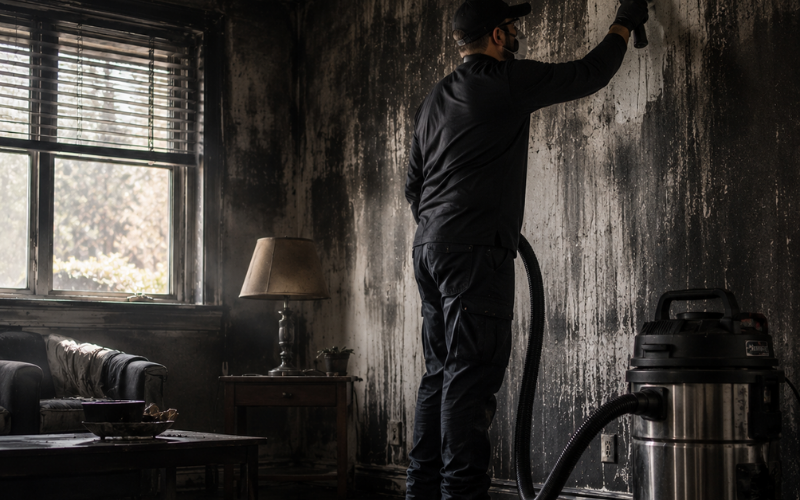
A person in protective gear cleans soot from a smoke-blackened wall in a fire-damaged room with a vacuum and cleaning tools.

Smoke Damage Cleanup

Including wildfire smoke that drifts into town during summer.
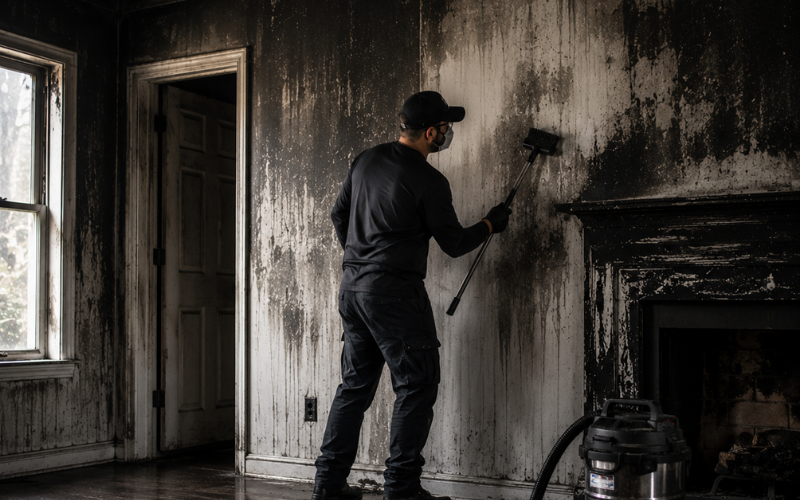
A person in protective gear uses a brush to clean smoke and soot from a fire-damaged wall in a room with charred surfaces, a fireplace, and a vacuum nearby.

Soot Removal

Soot lifted from plaster, brick and wood trim without smearing it deeper.
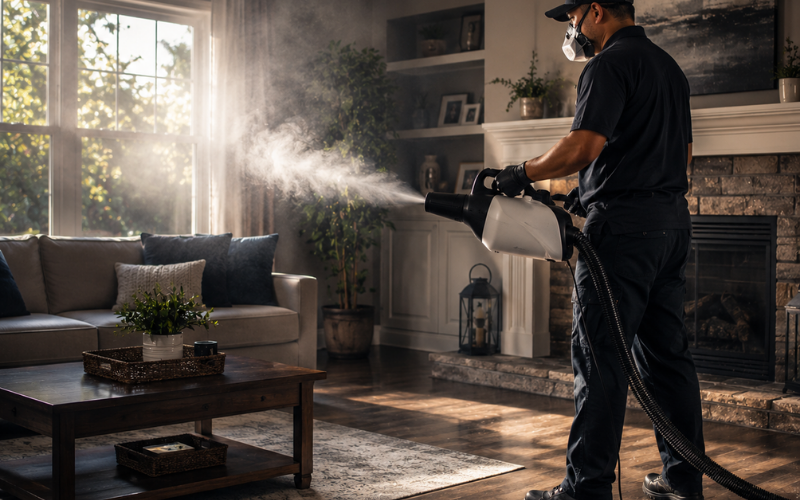
A person wearing gloves and a mask uses a fogging machine to disinfect a living room, as smoke-like mist drifts around a couch, coffee table, and fireplace in the background.

Smoke Odor Removal

Hydroxyl generators and thermal fogging break down odor instead of masking it.
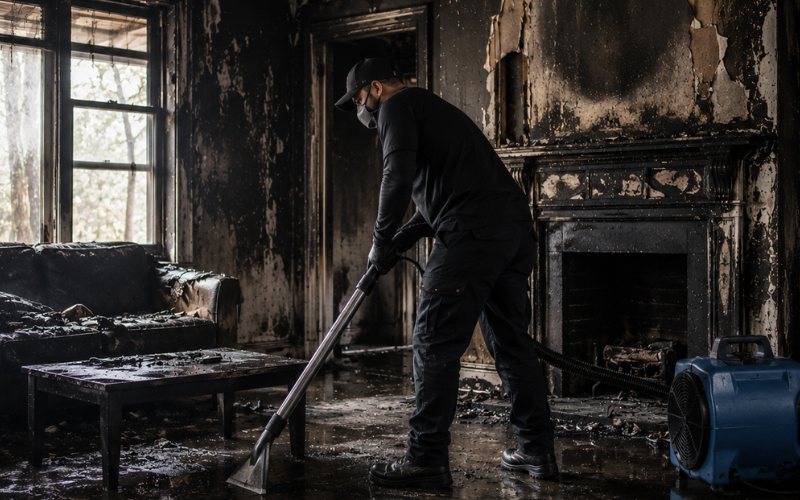
A person wearing protective gear uses cleaning equipment to remove debris and smoke residue from a heavily fire-damaged living room with charred walls and furniture.

Emergency Fire Damage Cleanup

Dispatch any hour, any day of the year.
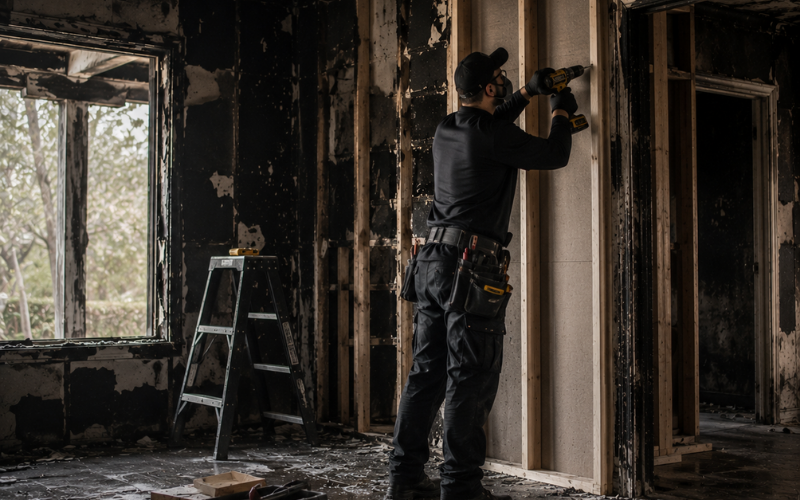
A worker in protective gear drills into a smoke-stained wooden frame inside a fire-damaged building; a step ladder is nearby.

Structural Fire Damage Repair

Charred and smoke-stained materials cleaned or removed so repairs can start.
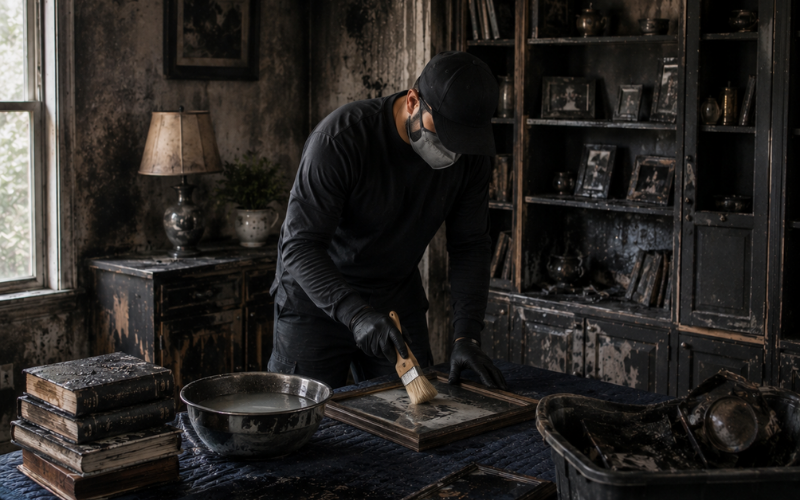
A person wearing a mask and gloves cleans a picture frame with a brush in a smoke-filled, soot-stained room, surrounded by fire-damaged books and furniture.

Contents Cleaning & Restoration

Furniture, clothing, photos, tools and electronics cleaned and deodorized.
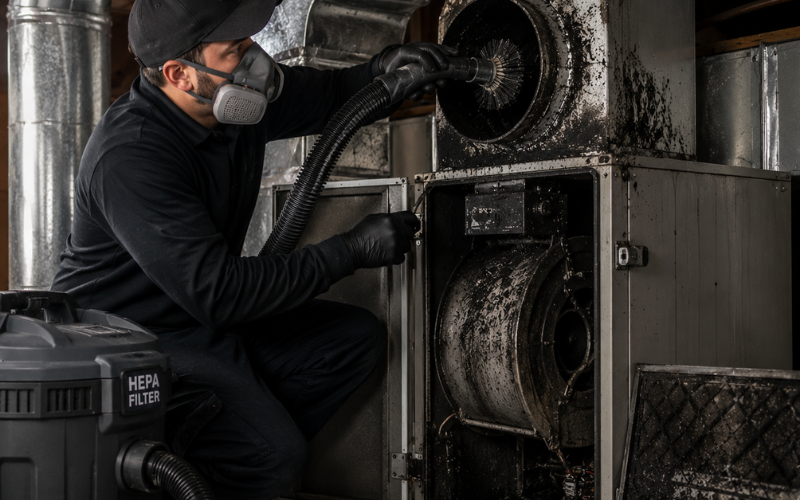
A worker wearing a mask and gloves uses a vacuum and brush to clean the interior of a large industrial ventilation system, removing smoke residue and reducing fire hazards.

HVAC Smoke Contamination Cleanup

Furnace, ducts and vents cleaned so smoke odor isn't recirculated.
A severely fire-damaged room with charred walls, ceiling, and debris scattered across the floor; furniture and belongings are partially burned, highlighting the urgent need for disaster cleanup service.

Board-Up & Property Securing

Broken windows, doors and roof openings secured against wind and weather.
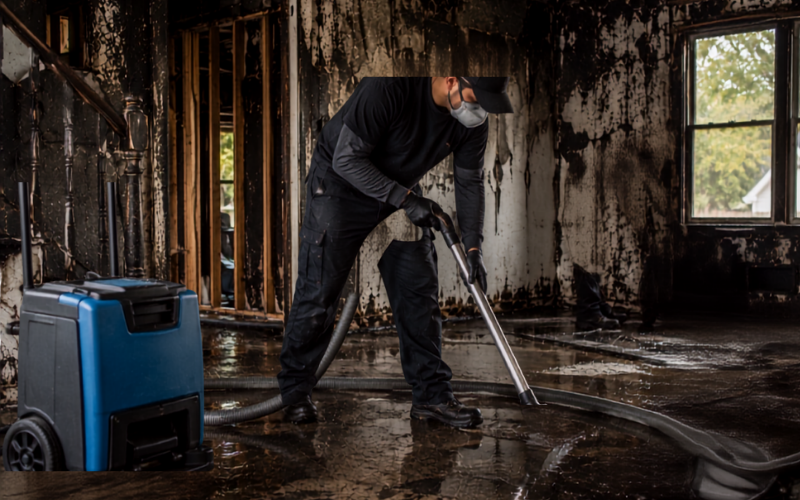
A person in protective gear uses a vacuum to clean a water- and fire-damaged room, with charred walls, smoke stains, and debris scattered across the floor.

Water Damage Cleanup After Firefighting

Hose water extracted and the building dried once the fire is out.

Insulation Removal & Specialty Cleaning in Livingston

Insulation that gets wet, smoky or full of rodent droppings stops doing its job and starts to smell. In a town where winter wind finds every gap, that shows up quickly in comfort and heating bills. We vacuum it out with commercial equipment, sanitize the cavity and leave it ready for new insulation.

Two industrial air movers are placed on a dusty floor near an open doorway, likely for drying purposes during a water restoration project or flood cleanup.

Water-Damaged Insulation Removal

Wet insulation pulled out so walls and ceilings can dry.
Person in protective suit seals a plastic barrier labeled "Mold Containment Do Not Enter" next to a wall with visible mold growth and a filtration device on the floor.

Mold-Contaminated Insulation Removal

Taken out under containment so spores stay put.
A sunlit, abandoned interior with charred walls, lingering smoke curling through the air, and debris on the floor; water reflects the light while signs of fire damage are visible throughout the room.

Smoke & Fire Damaged Insulation Removal

Gets rid of the smoke smell hiding in walls and attics.
Attic insulation with visible mold growth on wood beams and insulation material.

Rodent-Contaminated Insulation Removal

Nests, droppings and soiled insulation removed and the space sanitized.
Person in protective clothing measures fiberglass insulation with a tape measure in a wooden attic, preparing for insulation removal.

Crawlspace Insulation Removal

Low, tight crawlspaces under older homes handled with care.
A person sprays loose-fill insulation into an unfinished attic between wooden floor joists after completing insulation removal.

Attic Insulation Removal

Attic insulation cleared out, whether it's loose-fill or batts.
Exposed HVAC ductwork, pipes, and wiring are visible on the unfinished ceiling of a commercial building under construction or undergoing insulation removal and renovation.

Wet Insulation Removal

Fast removal after wind-driven snow or a roof leak soaks the attic.
Unfinished basement with exposed wooden framing, steel beam, visible ductwork, concrete floor, window, and construction materials stacked on the ground—ideal space for insulation removal or other insulation services to help prepare your home for future renovations.

Blown-In Insulation Removal

High-powered vacuum removal with little mess inside the house.
A person standing on a ladder installs fiberglass insulation in an unfinished interior wall of a house under construction, demonstrating professional insulation services that ensure energy efficiency and comfort throughout the home.

Batt Insulation Removal

Pulled, bagged and hauled off-site.
A person in boots uses a carpet cleaning machine to extract water from a soaked carpet in a residential room, performing essential water restoration after significant water damage.

Post-Restoration Cleanup

A final cleaning so the house is ready to live in again.

We Work With Your Insurance Company

We bill your insurer directly and give the adjuster what the claim needs: photos, moisture logs and a written estimate. Most homeowners end up paying just their deductible. Insurers we work with include State Farm, Allstate, Farmers, USAA, Liberty Mutual, Travelers, Nationwide and others. River flooding usually needs a separate flood policy, so check what you carry. For deductibles and costs insurance won’t cover, we offer 0% financing.

Why Treasure State

Why Livingston Homeowners Call Treasure State

We’re a family-owned Montana company, licensed, bonded and insured, with background-checked crews. Call any hour and a real person answers.

We’re members of the Bozeman Area Chamber of Commerce. Meet the team.

Water and Fire Damage Restoration Company Van

Your local water experts

Restoration Help for Livingston Property Owners

Serving All of Livingston, 24/7

Our crews cover all of Livingston, ZIP code 59047. That includes downtown and the B Street area, the Eastside and Westside neighborhoods and North Livingston. It also includes the southeast side, Ninth Street Island and newer homes in Discovery Vista. Outside town, we reach rural Park County homes in the Paradise Valley and the Shields Valley.

Nearby Communities We Serve

Southwest Montana Service Area

24/7 Restoration Services Near You

Don’t see your town? Call 406.404.9826. If it’s in Southwest Montana, we’ll get a crew there.

Livingston Restoration FAQs

Our Belgrade shop is about 35 miles away, roughly 40 minutes over Bozeman Pass on I-90. We dispatch 24/7, and a crew can leave as soon as you call. Wind, snow or a closure on the pass can add time.

Usually not. Standard homeowners policies generally exclude flood damage from a rising river. That coverage comes from a separate flood policy. Sudden and accidental water damage, like a burst pipe, is often covered. Either way, we document the damage with photos and moisture readings for your adjuster.

Start before spring runoff. Test your sump pump, move valuables off basement floors, and learn where your water and power shutoffs are. If you want flood insurance, buy it early, since new policies often have a waiting period. If Park County orders an evacuation, leave.

Yes. Plaster walls, original wood floors and brick need a different drying approach than newer drywall. We find the moisture with meters, save original materials where we can, and photograph everything before anything is removed.

Set the thermostat no lower than 55°F, even when you’re away. Open the cabinets under sinks on outside walls and seal drafts into the crawlspace, since wind drives cold air into those spaces. If the house will sit empty, turn off the water at the main and have someone check on it.

Most take three to five days. Water that soaked into old foundations, framing or plaster can take longer. We check moisture readings every day and keep the dehumidifiers and air movers running until the numbers say it’s dry.

It depends on the job: how much water there was, what it soaked and how long it sat. With a covered claim, most homeowners pay just their deductible. The inspection is free, you get the estimate in writing before we start, and 0% financing can cover your deductible or anything insurance doesn’t.

Yes. We work with landlords, property managers and HOAs. If water or smoke reaches several units or storefronts, we dry and document each one separately. That gives every owner and insurer a clear record.

Yes. We also work in the Paradise Valley and the Shields Valley, in Big Timber, Bozeman and Belgrade, and across much of Southwest Montana.

Water on the Floor Right Now? Do This First.

  1. Turn off the water at the main. In most homes the valve is in the basement or crawlspace where the line comes in.
  2. Watch for electrical hazards. Stay out of standing water near outlets or cords. Only flip breakers from a dry spot.
  3. Take pictures first. Photos of the damage before cleanup help your insurance claim.
  4. River rising? Follow Park County evacuation orders and wait until officials say it’s safe to go back in.
  5. Then call 406-404-9826. A real person answers, day or night.