
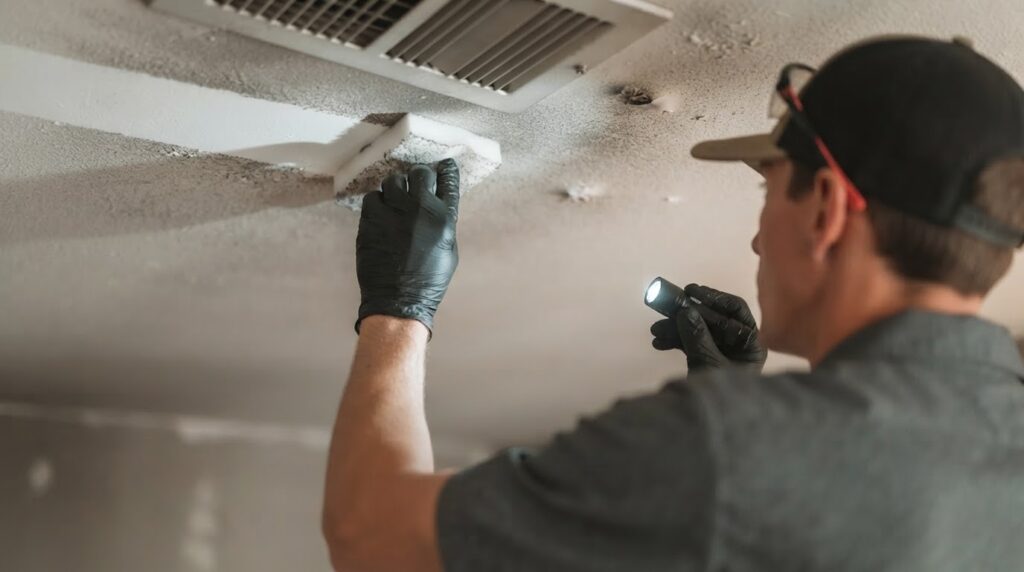
Long after the fire trucks leave or crews remove visible water, hidden property damage may remain. Smoke residue can settle in wall cavities, moisture can remain trapped beneath flooring, and damaged insulation may hide conditions not visible from the room.
A surface that looks dry is not proof that the materials beneath it are dry. Effective restoration begins with an inspection, moisture testing, and targeted investigation when the loss history suggests concealed damage.
For Belgrade property owners, Treasure State Restoration offers free inspections for water, fire and smoke, and mold damage. An inspection can help determine what needs drying, cleaning, removal, repair, or further evaluation before you cover or rebuild damaged areas.
What Is Latent Disaster Damage?
Latent disaster damage is harm that remains hidden or becomes noticeable after the initial emergency. It can develop inside walls, floors, ceilings, insulation, ductwork, and other concealed parts of a building.
Examples include:
- Moisture beneath flooring or behind drywall
- Smoke residue outside the visibly burned room
- Wet or compressed insulation
- Corrosion on susceptible metal components
- Mold developing around unresolved moisture
- Swollen or separated wood products
- Lingering odors inside porous materials
- Heat-damaged wiring or equipment
A fire can cause more than heat damage. Water used to suppress the fire may enter walls and floor assemblies. Smoke can travel through ventilation systems and openings around pipes or wiring.
Storms and plumbing failures can create similar hidden pathways. Water entering through a roof opening or broken pipe may travel far from where the first stain appears.
Signs That Hidden Damage May Remain
Don’t automatically dismiss changes after cleanup or repairs as cosmetic. Warning signs can include:
- Returning smoke or musty odors
- New or growing stains
- Bubbling or peeling paint
- Soft or uneven flooring
- Swollen baseboards or trim
- Cracking or sagging materials
- Condensation in unusual areas
- Rust or corrosion on metal components
- Odors that become stronger when heating or cooling equipment runs
- Recurring mold growth
Keep photographs, repair documents, moisture records, and insurance information from the original loss. These records may help an inspector compare current conditions with the earlier damage.
Hidden Moisture Inside Walls and Framing
Moisture can remain trapped between building layers where airflow is limited. Wall insulation, bottom plates, subflooring, and other materials may stay damp after exposed surfaces feel dry.
Moisture readings should be compared across affected and unaffected materials. A reading from one accessible surface cannot confirm that an entire wall, floor, or ceiling assembly is dry.
Belgrade’s cold weather can complicate the situation. Cold exterior surfaces may support condensation when warm indoor air reaches them. That means moisture inside a cavity could come from the original disaster, an active leak, condensation, or multiple sources.
Identifying the source matters because drying equipment cannot correct an ongoing roof leak, broken pipe, or building-envelope problem.
Do not remove wall coverings to investigate concealed moisture yourself. Electrical hazards, unstable materials, and potentially hazardous older building products may require professional assessment before you disturb anything.
Why Mold Can Appear on Metal Framing and Ductwork
Metal is not a food source for mold. However, mold can grow on dust, grease, paper residue, and other organic material attached to a damp metal surface.
Nearby materials may also be responsible. Drywall paper, insulation, duct lining, and accumulated debris can support mold when moisture remains present.
Metal framing can transfer heat through a wall assembly, creating colder surfaces where condensation may form. Cleaning visible growth without fixing that moisture pathway can let the problem return.
Ductwork also requires a material-specific assessment. Bare metal and porous internal duct lining do not respond to cleaning in the same way. Routine duct cleaning is not a substitute for evaluating smoke residue, wet insulation, or suspected microbial growth within the HVAC system.
Professional mold remediation should address both the affected materials and the moisture conditions supporting the growth.
Hidden Smoke and Soot Damage After a Fire
Fire damage does not end when visible debris is removed. Smoke can move through doorways, ventilation systems, wall openings, and gaps around plumbing or wiring.
Some combustion residues can become corrosive, especially when moisture combines with them. Others enter porous materials and continue releasing odors as temperature, humidity, and airflow change.
A complete fire and smoke damage restoration assessment should consider:
- Visible and concealed smoke residue
- Soot on surfaces and contents
- Water used during firefighting
- Heat exposure
- Damaged insulation
- HVAC contamination
- Electrical and mechanical equipment
- Persistent odors
- Materials that may require cleaning or removal
Repainting a smoke-affected room before identifying and cleaning the contamination may cover stains without removing the residue or odor source.
How Smoke Residue Can Affect Wiring and Equipment
Certain fire residues may contribute to corrosion on susceptible metals. Moisture can make those deposits more damaging.
After smoke exposure, electrical contacts, wiring, appliances, mechanical systems, and exposed metal components may need evaluation. Do not test questionable equipment by switching it on.
A licensed electrician or qualified equipment technician should determine whether smoke- or heat-exposed equipment is safe to operate, requires further testing, or needs replacement. Restoration cleaning cannot certify electrical or mechanical safety.
Cleaning methods should also follow manufacturer guidance. Aggressive products or incorrect techniques can damage components that survived the original event.
Why Smoke Odors Can Return
Porous materials such as unfinished wood, drywall paper, fabrics, and insulation can hold smoke residue below the surface. Temperature and humidity changes may make the odor more noticeable later.
Odor treatment should follow investigation, source removal, and cleaning. Deodorizing without addressing remaining residue may only provide temporary improvement.
The odor’s location and timing can guide the inspection. An odor strongest near an outlet may suggest a different pathway from one that appears only when the heating system starts.
These observations do not prove the source, but they help determine where further assessment may be needed.
Hidden Damage to Framing and Insulation
Moisture, heat, smoke, and contamination can affect materials differently. Wet wood may swell, layered panels may separate, and insulation can lose its intended shape or coverage.
Drying and structural condition are separate questions. A material may dry out without regaining its original strength or shape.
For example, a ceiling below a leak may appear ready for paint while the floor assembly above still requires inspection. The repair boundary should follow documented damage, not only the outline of the visible stain.
Damaged Insulation
Insulation may lose effectiveness after wetting, compression, contamination, or heat exposure. Fibrous insulation can settle or leave gaps, while smoke-contaminated insulation may continue holding odors even after it dries.
Before installing replacement insulation, correct the moisture source and assess the cavity. Otherwise, new material may conceal an unresolved problem.
Damaged Subflooring and Framing
Prolonged moisture can support wood decay, while plywood and other layered materials may swell or separate. A soft floor, cracked framing, or sagging area requires a condition assessment.
Moisture testing can identify wet materials, but it does not determine a structural component’s remaining load capacity. A qualified contractor or structural engineer may need to evaluate damaged load-bearing materials.
Keep people away from areas showing sagging, movement, or possible instability until a professional assesses them.
How Restoration Professionals Find Hidden Damage
Diagnostic equipment helps narrow uncertainty, but it does not replace professional judgment or knowledge of how the loss occurred.
Visual Inspection and Loss History
The inspection begins with the known source, affected rooms, visible stains, smoke patterns, odors, and changes reported after the event. This information helps trace likely paths of water and smoke.
Thermal Imaging
A thermal camera shows differences in surface temperature. These patterns may help identify areas that need closer investigation, but the camera does not directly prove moisture is present.
Moisture Testing
Moisture meters check suspected areas and compare affected materials with appropriate reference points. Meter type, material density, metal, and surface conditions can influence readings.
Targeted Openings
When noninvasive testing and loss history cannot answer an important question, a limited opening may be necessary to inspect concealed insulation, framing, or contamination.
| Assessment method | Useful for | Disruption | Main limitation |
| Visual inspection and loss history | Tracing stains, residue, odors, and likely damage pathways | No material removal | Cannot establish every concealed condition |
| Thermal imaging with moisture testing | Finding temperature patterns and checking suspected wet materials | Surface access; some probes may leave small holes | Requires skilled interpretation and material comparisons |
| Targeted cavity opening | Inspecting concealed framing, insulation, and contamination | Localized removal followed by repair | Shows the opened area, not every concealed space |
The goal is to use the least destructive method that can answer the question reliably. Opening every wall without supporting evidence is unnecessary. Declaring the property dry based on one accessible surface is equally unreliable.
How a Complete Restoration Plan Is Developed
A restoration plan should connect documented findings with each stage of the work.
1. Inspect and Document
The team records the loss history, visible damage, affected materials, moisture readings, smoke residue, and suspected concealed conditions.
2. Address Immediate Hazards
Promptly address active water entry, structural instability, electrical concerns, and unsafe equipment. Repairs or specialist evaluations may be needed before restoration can continue.
3. Prevent Further Damage
Mitigation may include water extraction, controlled drying, containment, emergency stabilization, protection of unaffected areas, or selective material removal.
4. Clean and Remove Contamination
Cleaning methods should match the material and residue type. Materials that cannot be cleaned, dried, or safely restored may require removal.
5. Verify Readiness for Repairs
Review moisture conditions and remaining contamination before closing wall cavities or replacing finishes.
6. Restore and Document Completion
You can begin approved repairs after the affected area is ready. Final records should explain the completed work and any remaining recommendations.
When Should You Request Another Inspection?
Request an inspection or reassessment when:
- Smoke or musty odors return
- New stains appear after repairs
- Flooring becomes soft, swollen, or uneven
- Paint begins bubbling or peeling
- Mold returns after cleaning
- Insulation remains wet or smells smoky
- Heating or cooling equipment spreads an odor
- Water continues appearing after drying
- Framing or ceilings show cracking or movement
- You are unsure whether concealed spaces were evaluated
Active water entry, suspected structural instability, or electrical hazards require immediate attention. Keep clear of unsafe areas and contact the appropriate emergency or licensed professional.
Insurance Documentation for Latent Damage
Hidden damage can complicate an insurance claim because the first inspection may not show the full extent of the loss.
Keep records of:
- Photographs and videos
- Original estimates
- Moisture readings
- Restoration documents
- Repair invoices
- Dates when new symptoms appeared
- Communications with the insurer
- Reports from electricians, engineers, or other specialists
Treasure State Restoration helps document property damage and communicate about the restoration scope. Insurance coverage, limits, exclusions, and claim payments are determined by the issued policy and insurance carrier.
Frequently Asked Questions About Latent Disaster Damage
Can mold grow on metal framing or ductwork?
Mold can grow on dust, residue, or other organic material on a damp metal surface. Nearby drywall, insulation, duct lining, and accumulated debris may also support growth. Cleaning must be paired with correction of the moisture source.
Why does smoke odor return months after a fire?
Smoke residue may remain in porous materials, concealed cavities, insulation, or HVAC components. Changes in heat, humidity, and airflow can make the odor noticeable again. Identify the source before performing additional deodorizing.
Can thermal imaging prove that a wall is wet?
No. Thermal imaging shows surface temperature differences that may indicate where further testing is needed. A moisture meter and professional interpretation are used to investigate whether moisture is present.
Does dry framing mean it is structurally sound?
Not necessarily. A material can dry while remaining warped, separated, weakened, or otherwise damaged. Structural concerns may require evaluation by a qualified contractor or engineer.
Should every wall be opened after a fire or flood?
No. Use the loss history, visible conditions, thermal patterns, and moisture readings to identify where targeted openings may be justified.
Schedule an Inspection for Hidden Property Damage
A property can look dry and clean while moisture, smoke residue, or damaged materials remain inside walls, floors, insulation, and ductwork.
Treasure State Restoration provides free inspections for water, fire and smoke, and mold damage throughout Southwest Montana. Our licensed, bonded, IICRC-certified, and IAQA-certified team uses moisture readings, thermal imaging, loss documentation, and targeted investigation to determine what requires cleaning, drying, removal, repair, or additional specialist evaluation.
We provide 24/7 emergency restoration service throughout Belgrade, Bozeman, Big Sky, and surrounding Southwest Montana communities.
If you notice returning odors, new stains, soft flooring, damaged insulation, or other changes after a disaster, call (406) 404-9826 or request a free inspection.
Related Services
- Water Damage Restoration and Hidden-Moisture Detection
- Fire and Smoke Damage Restoration
- Mold Remediation After Water Intrusion
- Insulation Removal Following Property Damage

- Latent Damage Can Linger Long After Disasters Strike - November 16, 2026
- Tub Leaking Through the Ceiling? Signs of Plumbing Failure - October 22, 2026
- Water in Basement? What It Means & How to Stop It for Good - September 11, 2026